


Furniture Manufacturer Boosts Profit by $1.1M and Cuts Invoice Cycle Time by 40%
.jpg)

Context
Stabilizing an Overburdened andInefficient Accounts Payable Function
Our client, a $500M furniture manufacturer, operated acentralized Accounts Payable (AP) function that had grown disproportionatelylarge. Leadership had continually added headcount to compensate forinefficient, fully manual invoice processing across three separate ERP systems.This complex environment created significant delays, critical data accuracyissues, and inconsistencies. The team frequently paid invoices late andexperienced high turnover due to poor morale and a frustrating workenvironment. Recognizing that simply adding staff was not a sustainablesolution, leadership sought external support to stabilize operations and driveperformance improvement.
What We Discovered
Uncovering the Root Causes of APDysfunction
Through a comprehensive current-state assessment conductedwith the AP manager and team members, we identified several underlying issuesdriving poor performance. These root causes coalesced to produce long cycletimes, missed early-payment discounts, and a significant backlog of overduepayables:
· Highly manual, non-standardized workflows created wide variationin how invoices were processed and what was considered an acceptable standard,leading to inconsistency and errors.
· Limited visibility into performance made it difficult forleaders to track productivity, pinpoint operational bottlenecks, or hold staffand upstream stakeholders accountable for delays.
· Inaccurate and clutteredAP aging reports, including aged payables with erroneous or duplicatetransactions, distorted the company’s true liabilities and hindered effectivecash-flow planning.
Results and Impact
Transforming AP into a Profit-DrivingFunction
Within just three months of ourengagement, our client realized significant and material performanceimprovements. The transformation allowed the furniture manufacturer to convertAP from a labor-intensive cost center into an efficient, data-driven functionthat directly contributes to profitability and cash-flow optimization.
- Achieved a $1.1M in-year profit gain by eliminating aged payables over 90 days, reducing them from $1.2M to $0.
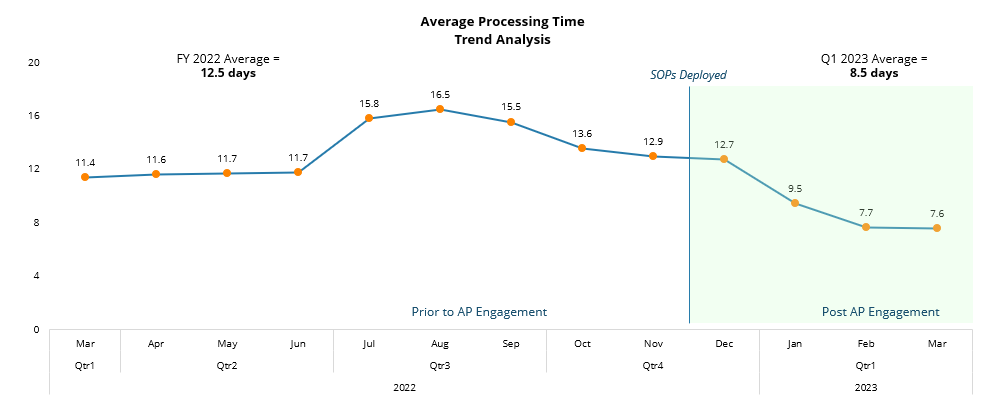
- Delivered a 40% decrease in invoice processing time, cutting the average cycle from 12.6 days to under 8 days.
- Generated $200K in recurring annual savings from early payment discounts made possible by the faster, more reliable processing.
- Established a more controlled, transparent AP environment with improved data integrity, clearer expectations, and a more manageable workload for staff.
What We Did
A Hands-On Approach to ProcessImprovement and Performance Management
We worked side-by-side with morethan 30 employees across the Shared Services organization to design andimplement practical solutions. To capitalize on these opportunities, we tested,piloted, and implemented these changes, ensuring buy-in and sustainabilityacross the entire AP function:
- Process Standardization and Retraining: We standardized and documented clear Standard Operating Procedures (SOPs) for invoice processing. We then conducted comprehensive training sessions to align all staff on consistent standards for timeliness and data accuracy.
- Performance Visibility and Management: Using data from the existing ERP systems, we created a Key Performance Indicator (KPI) dashboard to visualize performance data in real time. This established clear performance visibility to measure success and hold staff and stakeholders accountable.
- Aged PayablesClean-Up:Our team systematically reviewed aging reports, validating theaccuracy of aged payables to identify and clear erroneous or duplicatetransactions